
Last Updated on October 13, 2025 by Jason
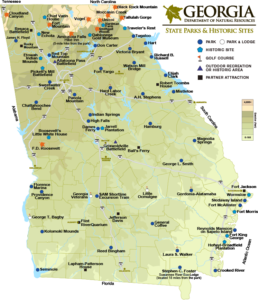
Where Nature Meets History
Georgia’s state parks are more than just scenic getaways; they are living museums that preserve the heart and history of the American South.
From ancient Native American settlements to Civil War battlefields and New Deal-era architecture, each park reflects a chapter of the Peach State’s diverse legacy.
Whether you’re hiking up Amicalola Falls, exploring the canyons of Providence Canyon, or walking through the ruins of Fort Mountain,
Georgia’s state parks invite you to experience the powerful blend of natural wonder and historical depth.
1. Amicalola Falls State Park: The Gateway to the Appalachian Trail
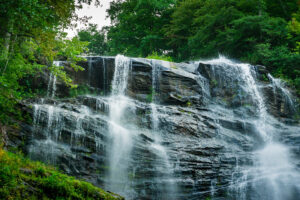
Located in Dawsonville, Amicalola Falls State Park boasts the tallest cascading waterfall in the Southeast, standing an impressive 729 feet high.
The name “Amicalola” comes from a Cherokee word meaning “tumbling waters,” reflecting the area’s deep Native American roots.
Historically, this region served as part of the Trail of Tears—the forced relocation of the Cherokee people in the 1830s.
Interpretive signs and exhibits throughout the park pay tribute to this somber chapter, reminding visitors of the land’s original inhabitants and their enduring cultural impact.
Today, Amicalola Falls serves as the southern gateway to the famed Appalachian Trail, attracting hikers from around the world.
The park’s lodge, built by the Civilian Conservation Corps (CCC) in the 1930s, stands as a testament to the New Deal programs that shaped many of Georgia’s park facilities.
2. Fort Mountain State Park: Mystery and Mountain Views
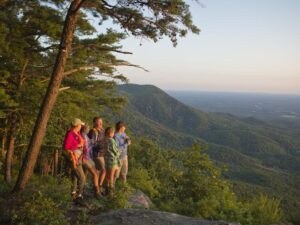
However, what sets this park apart is its mysterious prehistoric stone wall that snakes across the mountain summit for nearly 900 feet.
The origins of this structure remain debated. Some historians believe it was built by Native Americans as a ceremonial or defensive structure, while others suggest it may predate known civilizations in the region. The Cherokee associated it with the “Moon-Eyed People,” a mythic race said to have inhabited the land before them.
Beyond its archaeological intrigue, the park also showcases remnants of the 1930s CCC era, including rustic cabins and trails built by hand.
Today, visitors can hike, mountain bike, or simply stand atop the overlook to witness a view that spans centuries of Georgia’s natural and human history.
3. Providence Canyon State Park: Georgia’s “Little Grand Canyon”
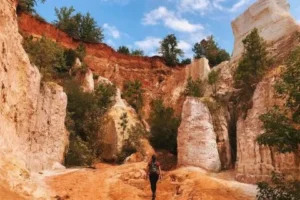
Known as Georgia’s Little Grand Canyon, Providence Canyon State Park near Lumpkin offers one of the most striking geological features in the Southeast.
However, its beauty comes with a cautionary tale. The canyons were not naturally formed over millennia but created within just a few decades due to poor farming practices in the 1800s.
Settlers cleared the land for cotton without understanding the erosion-prone nature of the soil. Within years, gullies as deep as 150 feet had formed, transforming the landscape into today’s dramatic cliffs and ravines. The site now stands as a powerful reminder of the environmental consequences of human activity.
Despite its tragic beginnings, Providence Canyon is now a conservation success story. It serves as a living classroom for geology, ecology, and environmental science, demonstrating nature’s ability to heal and adapt over time.
4. Kolomoki Mounds State Park: Echoes of Ancient Civilizations
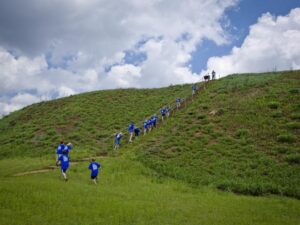
Near Blakely in southwest Georgia lies Kolomoki Mounds State Park, one of the most significant archaeological sites in the southeastern United States.
Dating back to around 350–750 A.D., this site was once home to a thriving Woodland Period culture that predated European contact by centuries.
The park features seven earthen mounds used for ceremonial, burial, and residential purposes. The central temple mound rises 57 feet high, offering panoramic views of the surrounding landscape.
Artifacts discovered here — including pottery, tools, and ornaments — reveal a complex society with religious, artistic, and trade networks that extended across the region.
Kolomoki serves as a bridge to Georgia’s pre-Columbian heritage, emphasizing the state’s role as a crossroads of ancient civilizations long before the arrival of European settlers.
5. Wormsloe Historic Site: The Oldest Plantation Ruins in Savannah
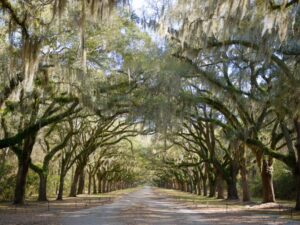
While not a state park in the traditional sense, Wormsloe Historic Site in Savannah holds immense historical importance within Georgia’s state park system.
Founded by Noble Jones in the 1730s, one of Georgia’s original colonists under James Oglethorpe, Wormsloe represents the earliest European settlement still standing in the state.
Visitors enter through a breathtaking mile-long avenue lined with live oaks and Spanish moss, leading to the tabby ruins of Jones’s colonial estate.
The site offers interpretive programs on colonial life, slavery, and the plantation economy that defined early Georgia.
Wormsloe captures both the beauty and the complexity of Georgia’s early history — from colonial ambitions to the struggles for independence and identity that followed.
6. Roosevelt’s Little White House State Historic Site: Legacy of Leadership

Few places in Georgia capture the intersection of history and humanity like Roosevelt’s Little White House in Warm Springs.
Built in 1932 by President Franklin D. Roosevelt, the retreat served as both a personal refuge and a working presidential residence during the Great Depression and World War II.
Roosevelt first came to Warm Springs in 1924 seeking treatment for polio in the area’s natural mineral springs.
He later developed a deep bond with the local community, leading to the establishment of the Warm Springs Foundation,
a rehabilitation center that became a model for modern physical therapy.
The site preserves Roosevelt’s modest home exactly as it was on the day of his death in 1945, including the “Unfinished Portrait” that hangs in the museum.
It remains a symbol of courage, perseverance, and leadership in the face of personal adversity.
Preserving Georgia’s Living History
Georgia’s state parks do more than protect natural landscapes—they safeguard the stories that define generations.
From the ancient mounds of Kolomoki to the waterfalls of Amicalola and the presidential retreat at Warm Springs, these parks invite visitors to walk through time while surrounded by the state’s unparalleled natural beauty.
Whether you’re a history buff, hiker, or weekend adventurer, Georgia’s state parks offer a profound reminder that the past is not something left behind—it’s something we live alongside every day.

Check out some of my photography prints that are for sale on Fine Art America